Description
ART. VICUNA / CASHMERE V. 4/26 NATURAL CAMEL – VIDEO DISPONIBILE
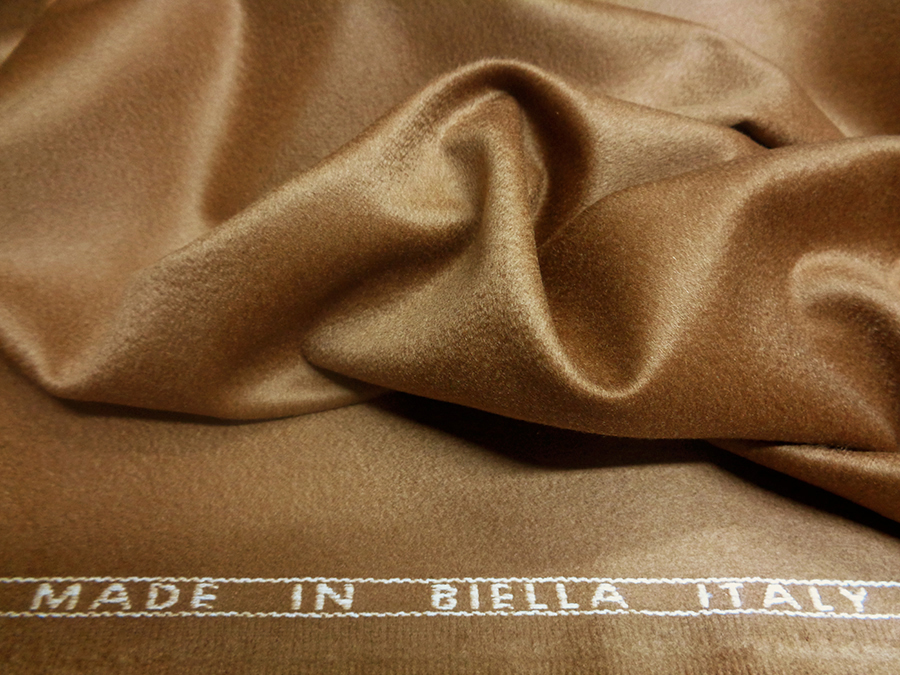
50% VICUNA, 50% CASHMERE – MADE IN ITALY (BIELLA)
STOCK PRICE € 790 /MT
(COMMERCIAL VALUE € 3.000,00)
GSM 460 – W 150 cm
SAMPLE (10 x 10 cm) €20 EACH
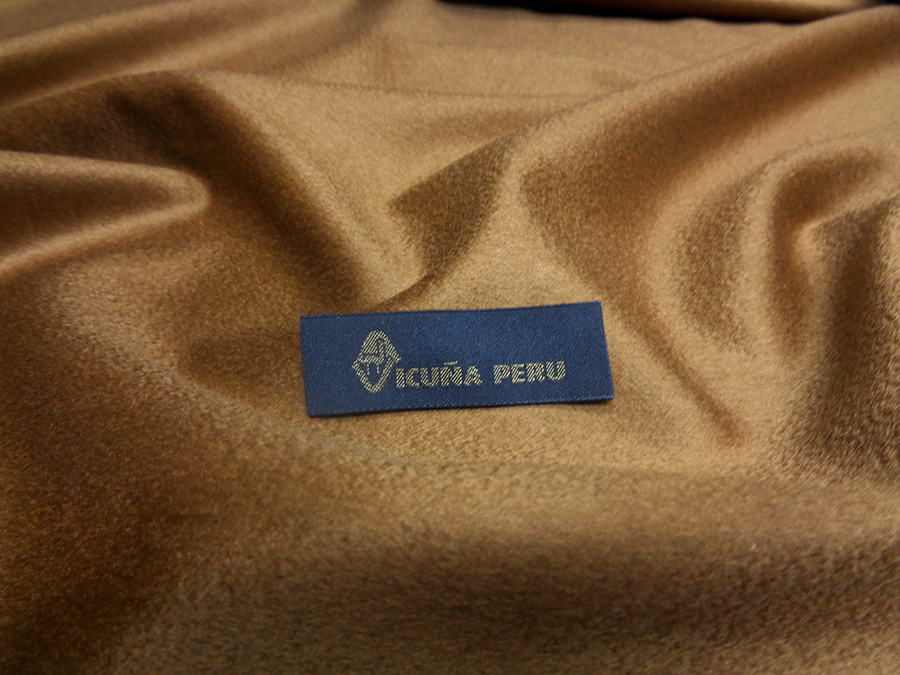
SELVEDGE “CASHMERE AND VICUNA PERU’ – MADE IN BIELLA, ITALY” (WITH LABEL)
UNISEX FABRIC SUITABLE FOR: COATS, JACKETS, HEAVY JACKETS, CAPES, BLANKETS, THROWS, HATS, ETC.
This extremely high-quality fabric is created by blending vicuña, the rarest and most exclusive textile fiber in the world, often referred to as the “fiber of the Gods,” with Top Mongolian Cashmere, selected for its finesse, purity, and textile performance, in the same natural camel shade.
The distinctive value of this quality lies in the natural camel color of the vicuña, derived directly from the animal’s fur, not the result of dyeing or color enhancement. This is complemented by a Top Mongolian Cashmere, also in a natural camel shade, chosen to perfectly match the vicuña without altering its authenticity and noble chromatic quality.
The result is a pure, homogeneous, and absolutely natural color balance, impossible to replicate artificially.
The superior-quality cashmere blends harmoniously with the vicuña, enhancing its softness, elasticity, and comfort without ever overpowering its nobility.
The fabric stands out for:
- The absolute rarity of its raw materials
- Natural camel color, pure and elegant, a direct expression of the fibers
- Extraordinarily soft and silky feel, with a full body
- Natural luminosity and color depth
- High warmth and body, ideal for high-end garments
UNISEX FABRIC SUITABLE FOR: COATS, JACKETS, HEAVY JACKETS, CAPES, BLANKETS, THROWS, HATS, ETC.
CARE INSTRUCTIONS
Cleaning must be entrusted exclusively to specialised dry-cleaning services.
Do not bleach. Do not tumble dry. Iron at low temperature.
VICUÑA: the history of the world’s most precious fibre
The most precious and exclusive textile fibre in the world comes from the smallest South American camelid: the vicuña.
Approximately 80% of this protected species, of which there are currently around 180,000 specimens, lives in the Andes, in large reserves that allow the animals to roam freely. Considered sacred by the Inca civilisation, the vicuña faced near extinction from 1572, marking the fall of the Inca Empire, until the 1970s.
The decline of this species, which began after Spanish colonisation, was first caused by the conquistadors and later by poachers who persecuted the animal for centuries to obtain its extraordinarily precious fleece.
By 1960, only about 5,000 specimens remained, compared to nearly 3 million in the 16th century. Between the 1960s and 1970s, the Peruvian state initiated the first conservation efforts, creating natural reserves and issuing decrees regulating hunting and trade.
In 1976, in Washington, the vicuña was listed in Appendix I, reserved for species requiring the highest level of protection. This action, taken by the United Nations international convention regulating trade in endangered animals and plants, effectively ended all forms of exploitation of the vicuña.
Numerous factors justify the extraordinary value of its fleece, so precious that it is often referred to as the “Fleece of the Gods.”
Its rarity is compounded by the extremely limited quantity of fibre produced: an adult vicuña yields approximately 100 grams of fibre every two years. To produce a single coat, the fleece of 25–30 adult animals is required.
Finally, the outer layer of the vicuña’s coat has a fibre diameter of approximately 12 microns, even finer than cashmere, which averages 15 microns. This makes it one of the most precious fibres in the world, justifying both its exceptional softness and natural lustre, as well as its legendary name: “the fibre of the gods.”